Personal DevelopmentTales

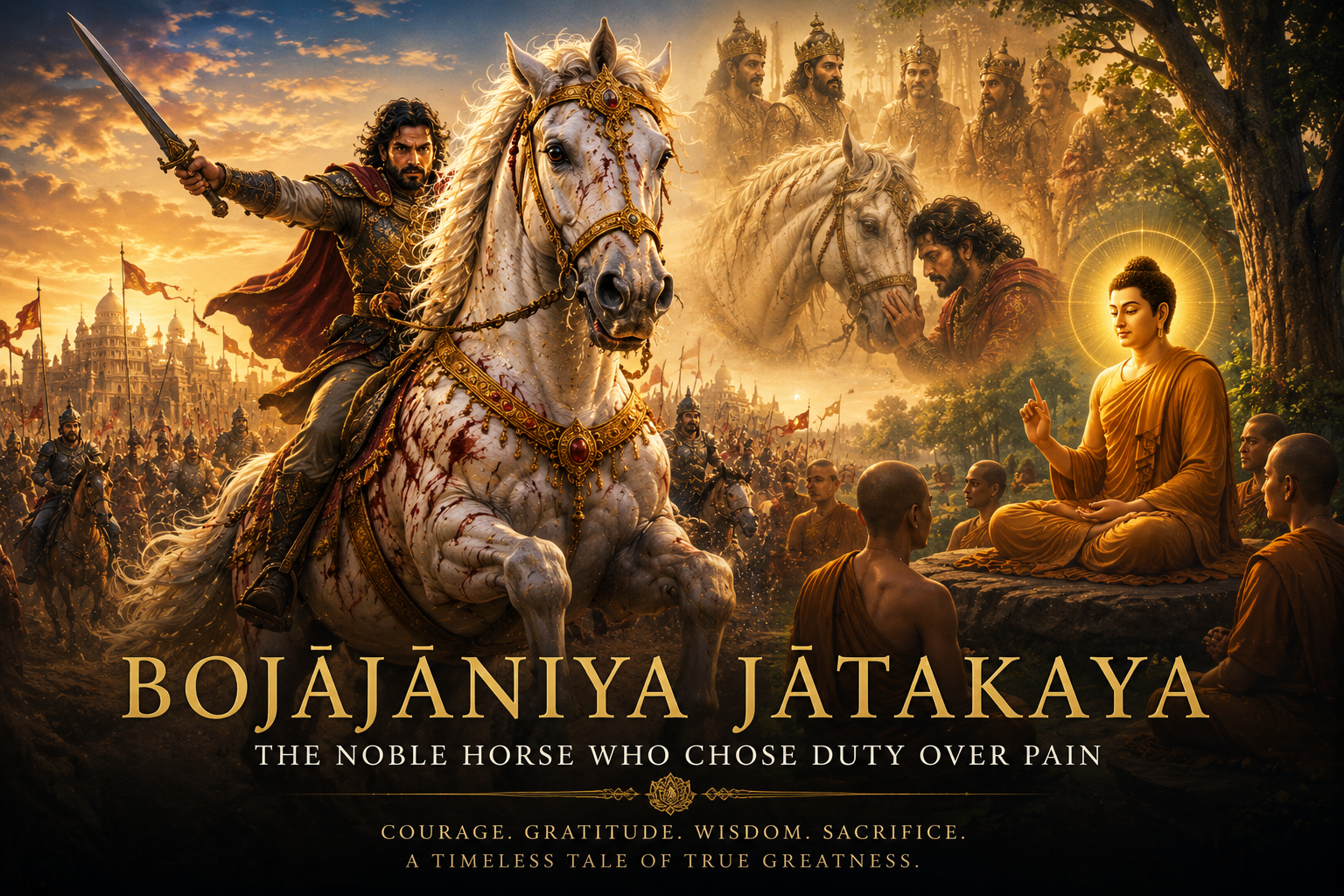
Bojajhaniya Jathakaya

Posted

When courage refused to give up.

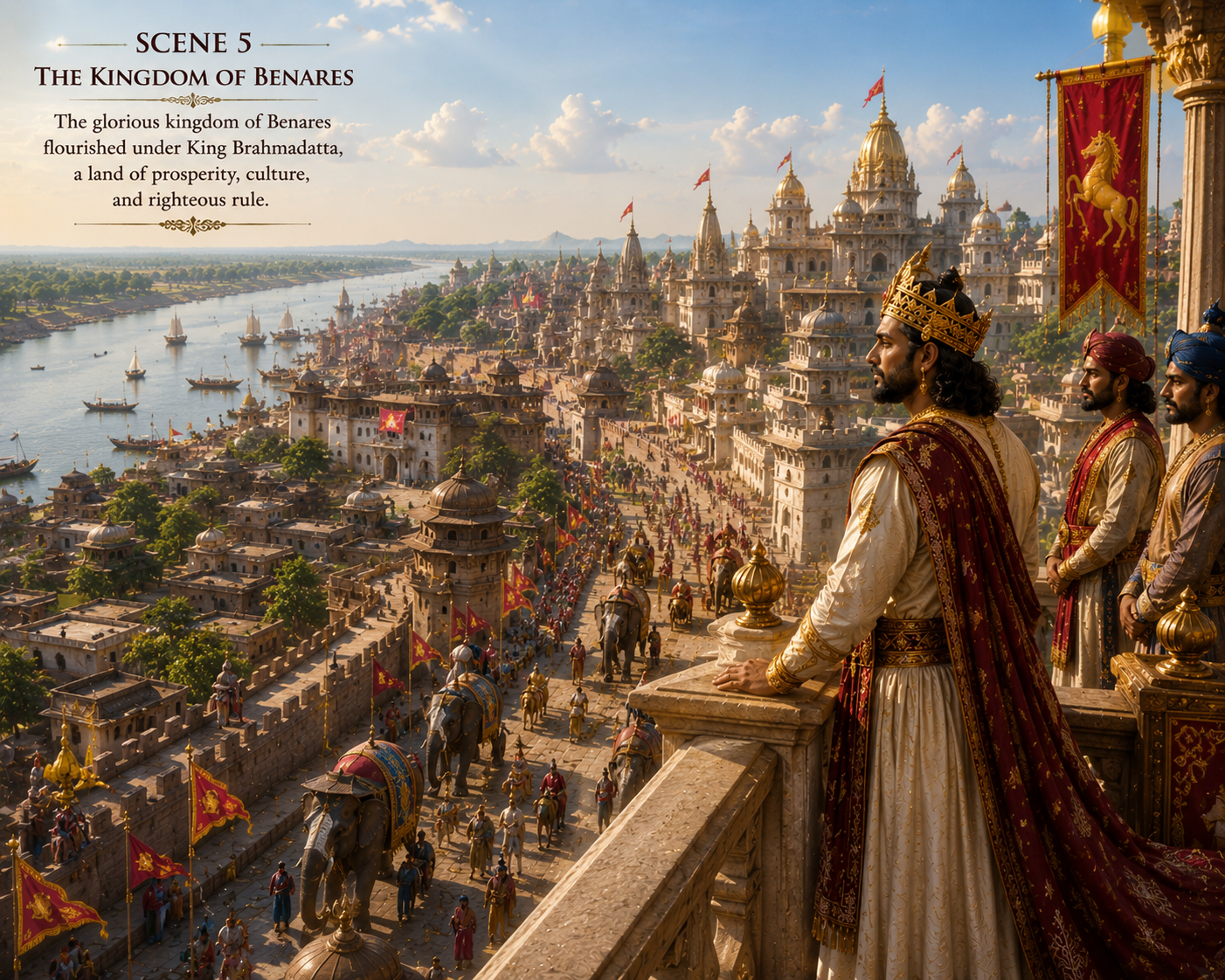
Long ago, the Buddha, seeing a monk lacking effort, decided to share a teaching from a past life. In that life, the Bodhisatta was born as a Bojājānīya horse—not an ordinary horse, but a noble, fearless leader among horses, respected for his strength and wisdom. King Brahmadatta of Benares treasured this horse, treating him with special care, fine stables, and royal honor.

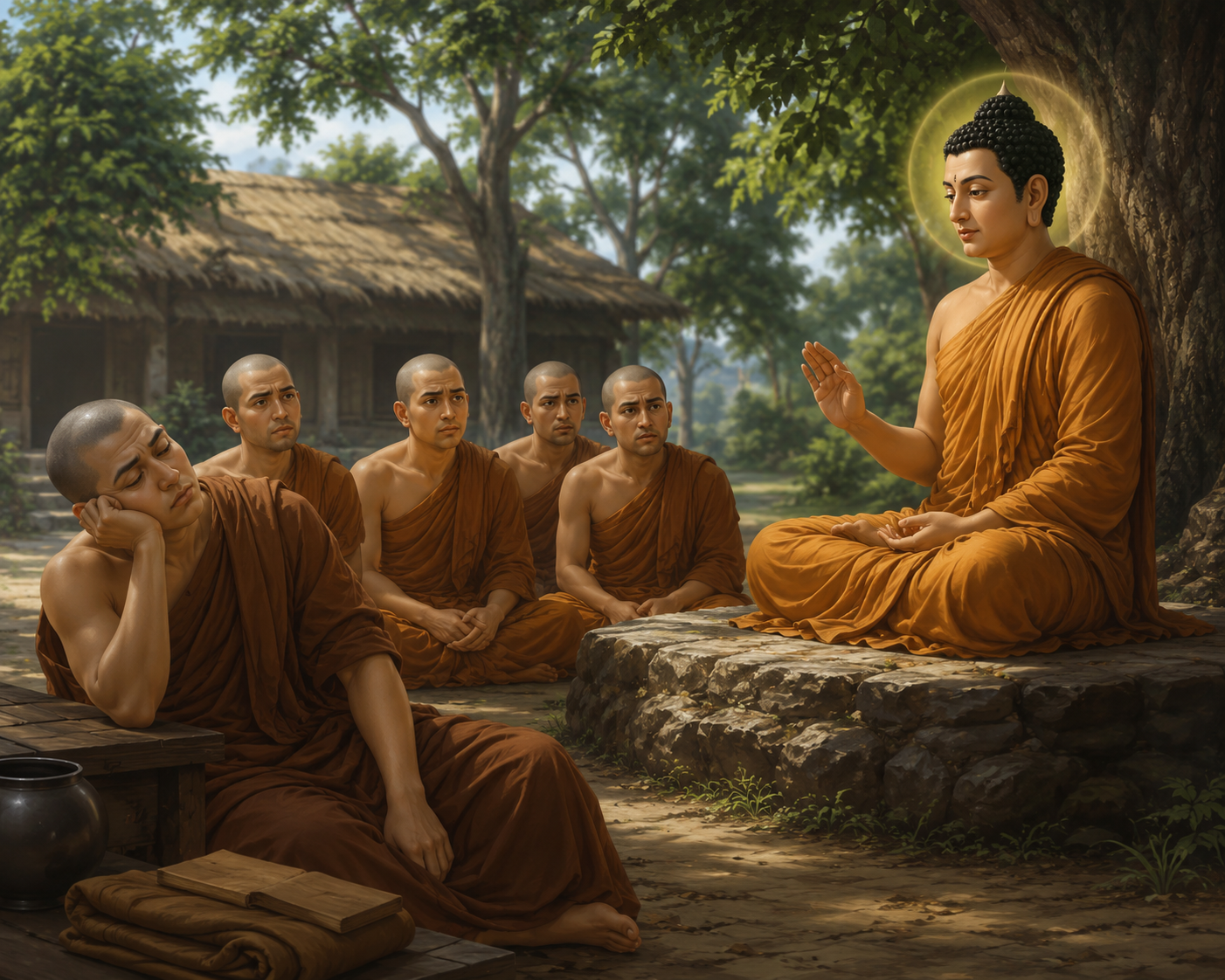
The Lazy Monk
A monk had become careless in his practice. To awaken his determination, the Buddha shared a story from a distant past life.
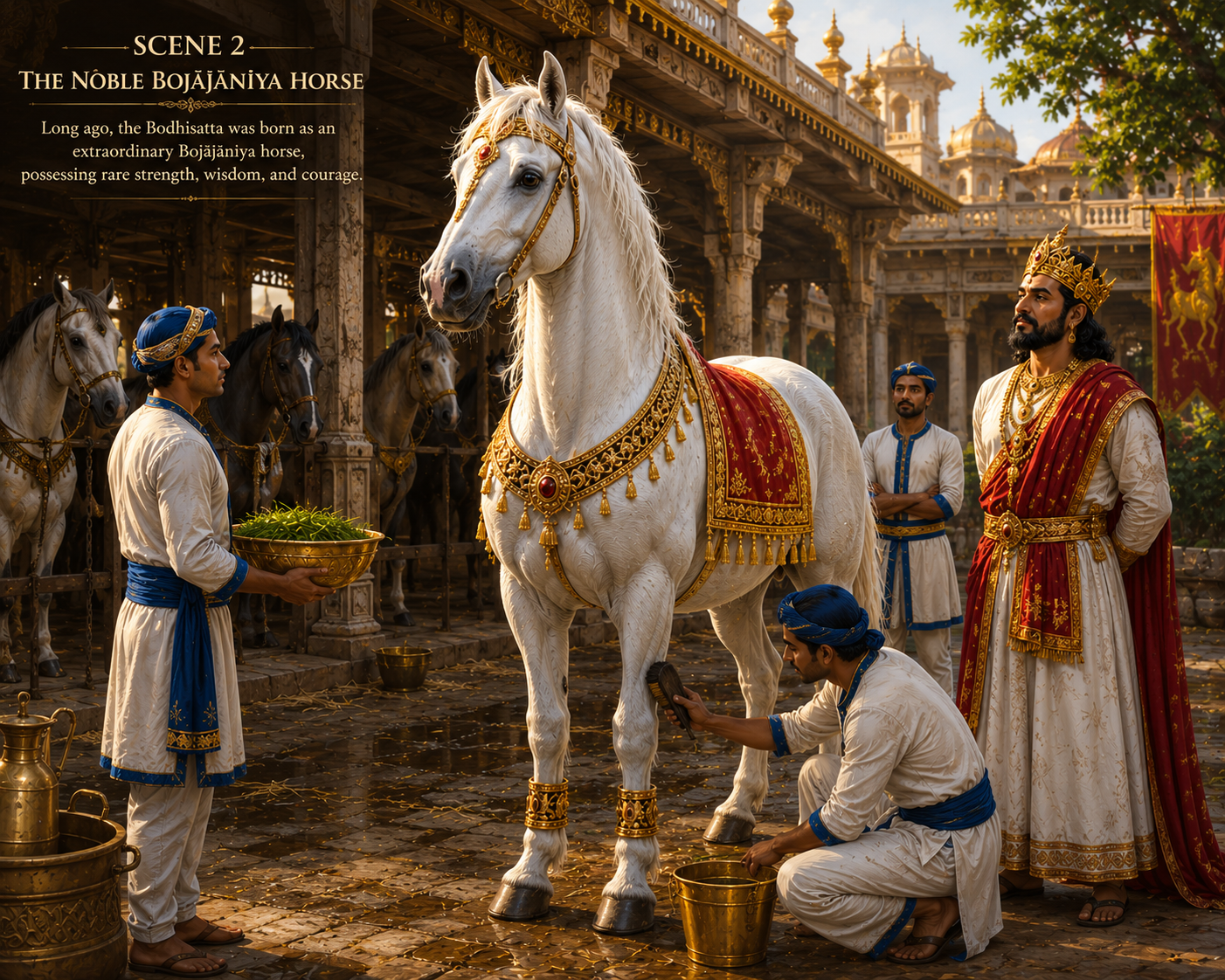
The Noble Bojājānīya Horse
In a previous life, the Bodhisatta was born as an extraordinary Bojājānīya horse, possessing rare strength, wisdom, and courage.
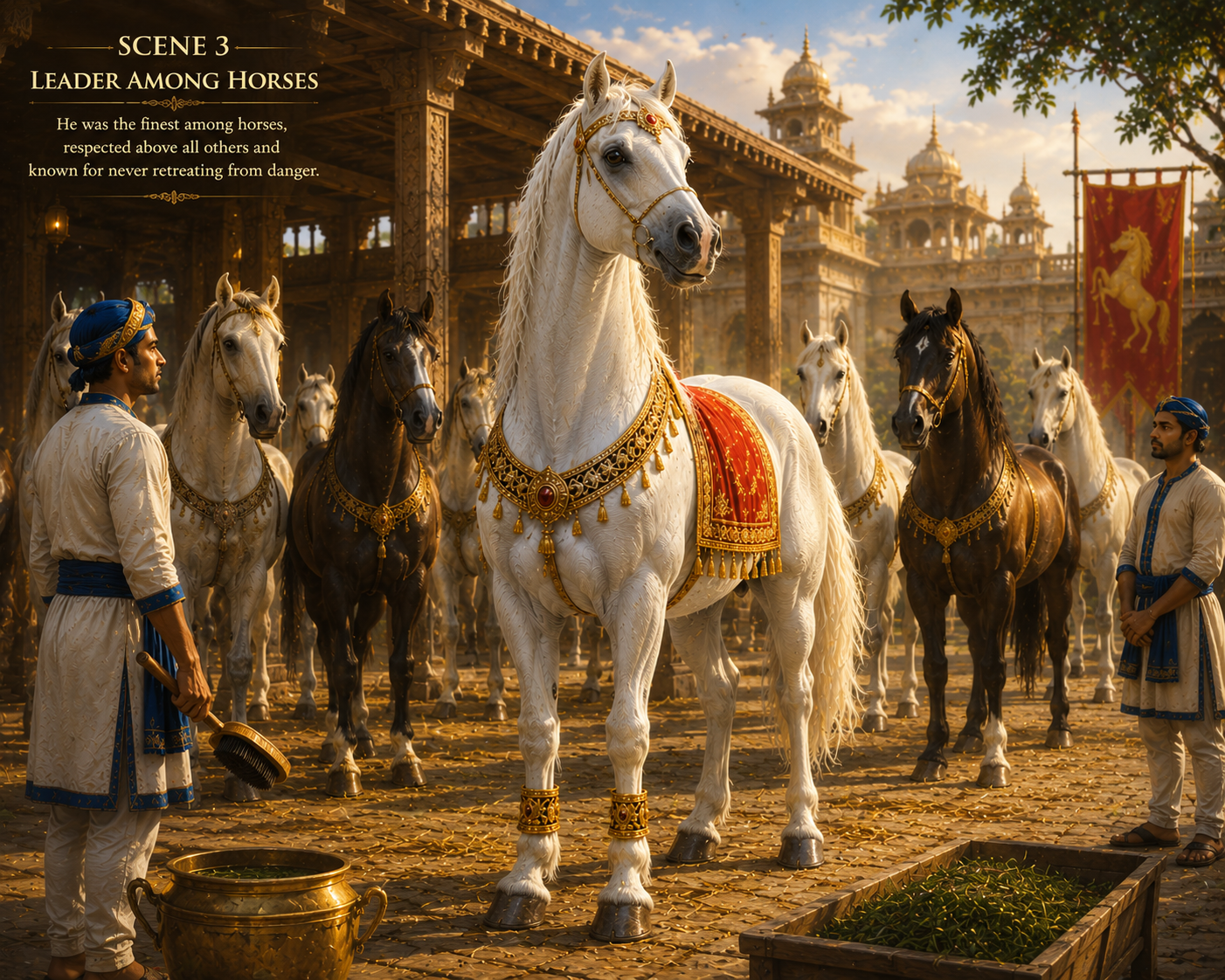
Leader Among Horses
He was the finest horse in the kingdom, respected above all others and known for never retreating from danger.
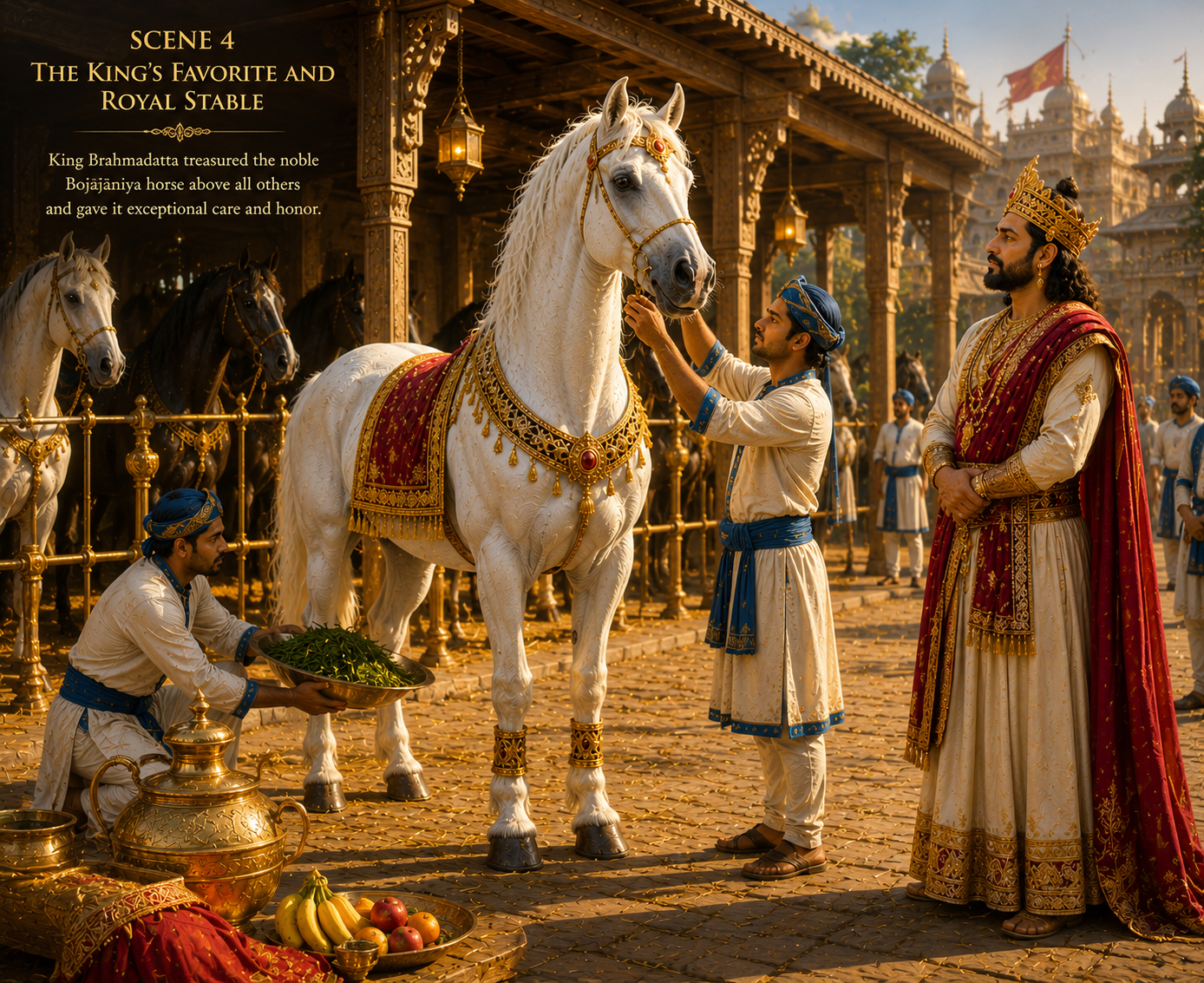
The King's Favorite
King Brahmadatta treasured the horse and treated him with exceptional care and honor.The horse lived comfortably in the royal stables, receiving the best food, care, and protection.
Life in the Royal Stable
The horse lived comfortably in the royal stables, receiving the best food, care, and protection.
Seven Kings Invade
Seven rival kings surrounded the kingdom of Benares with their armies, threatening to conquer it.
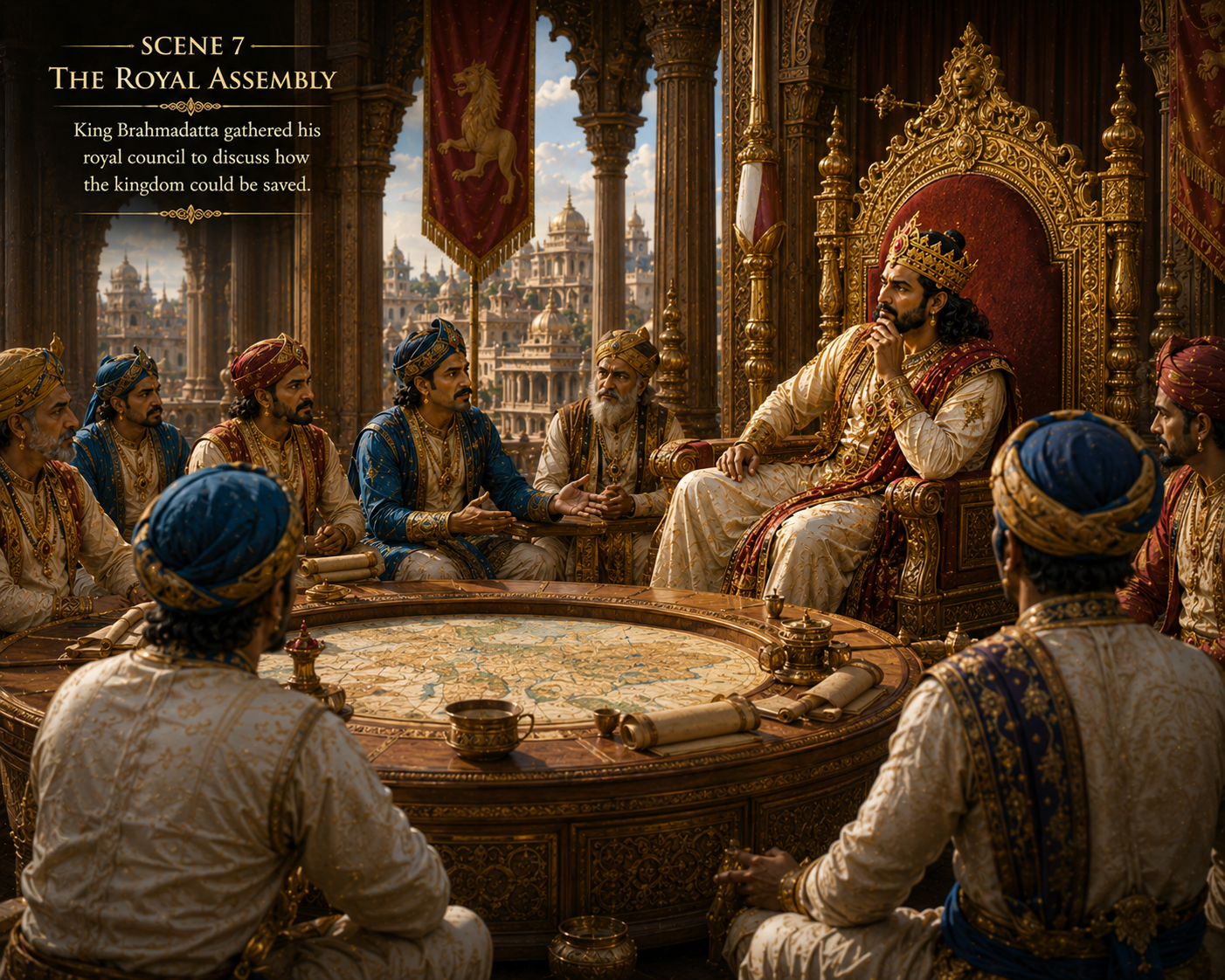
The Royal Assembly
King Brahmadatta gathered his royal council to discuss how the kingdom could be saved.
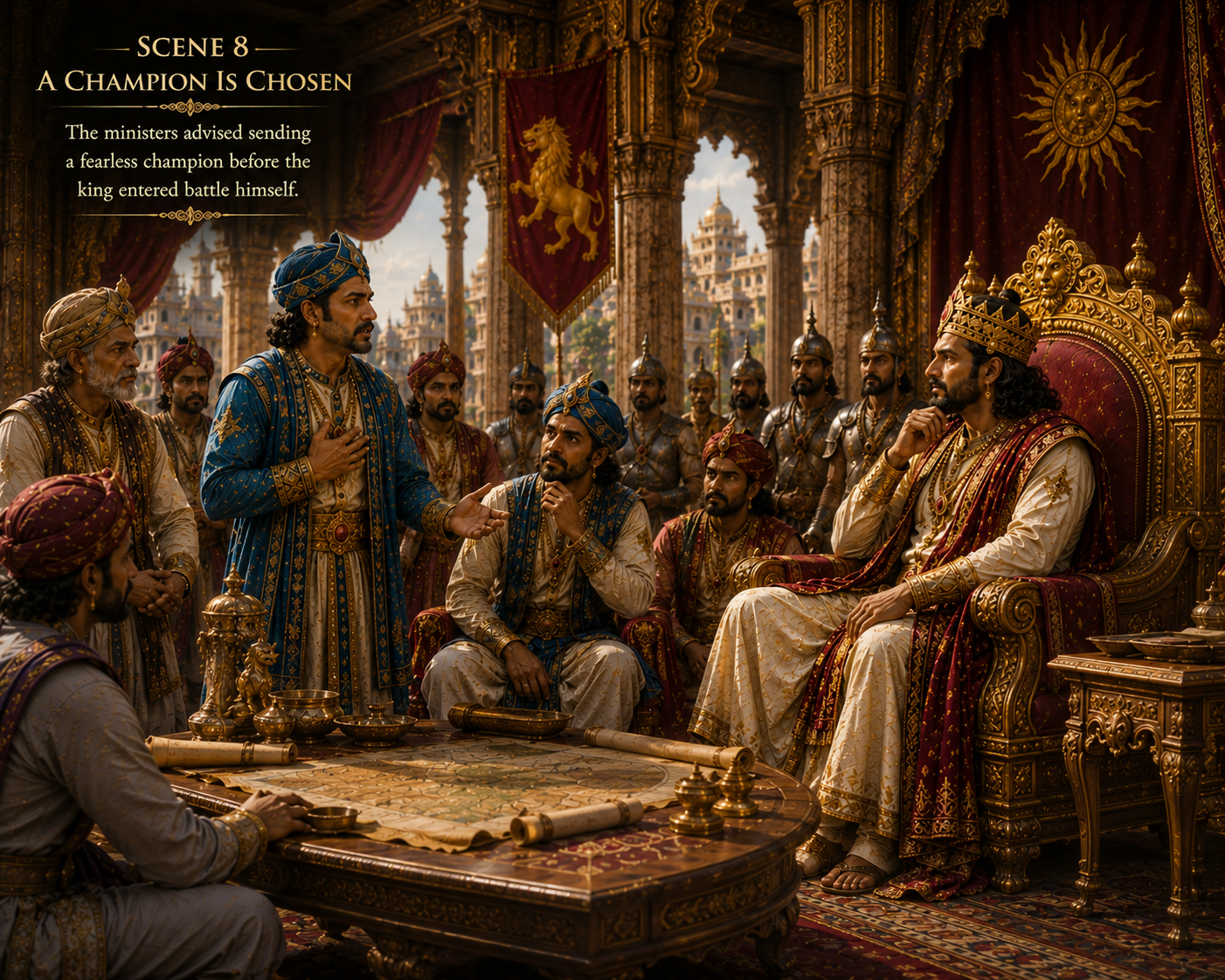
A Champion is Chosen
The ministers advised sending a fearless champion before the king entered battle himself.
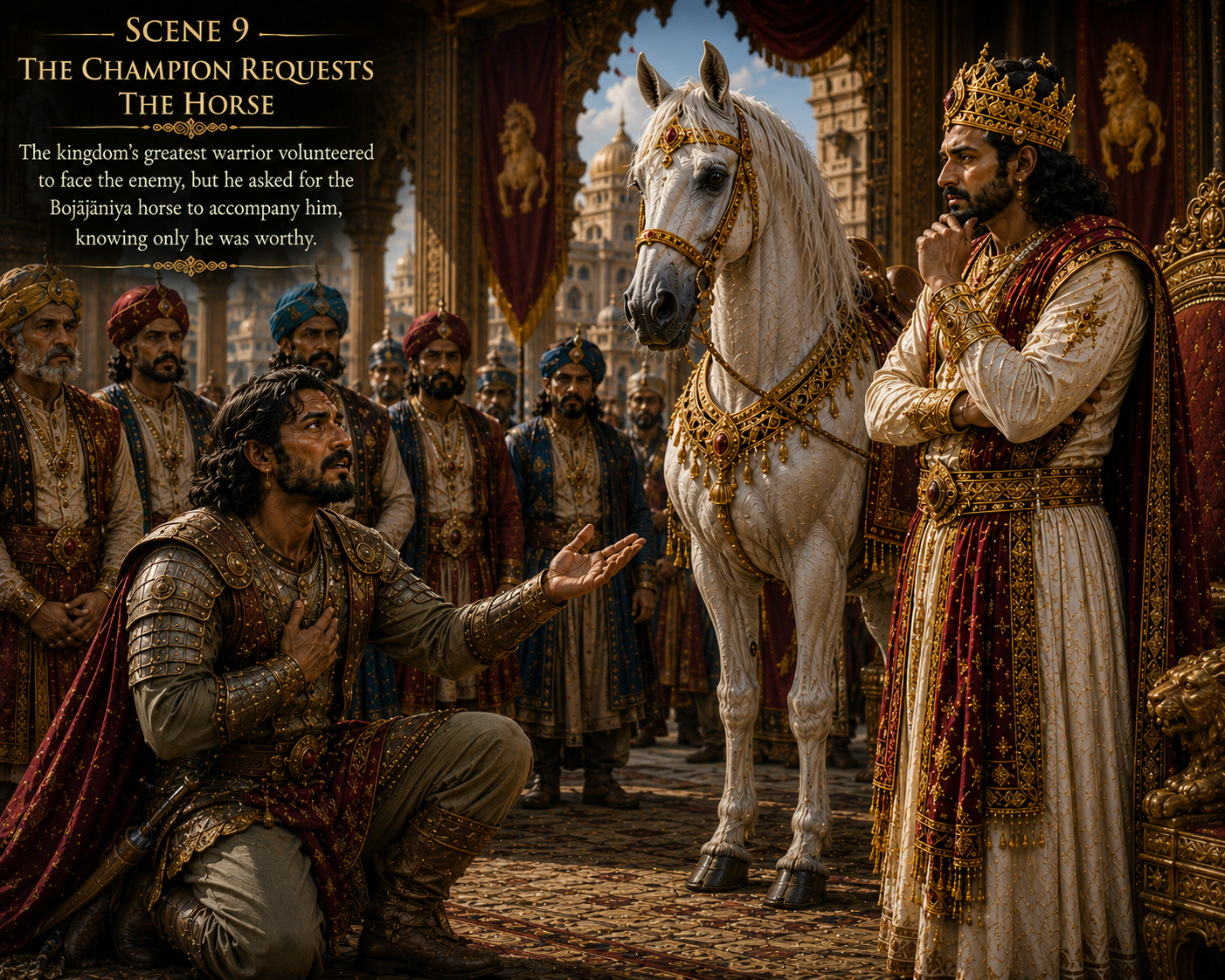
The Champion Requests the Horse
The kingdom's greatest warrior volunteered but asked for the Bojājānīya horse to accompany him.
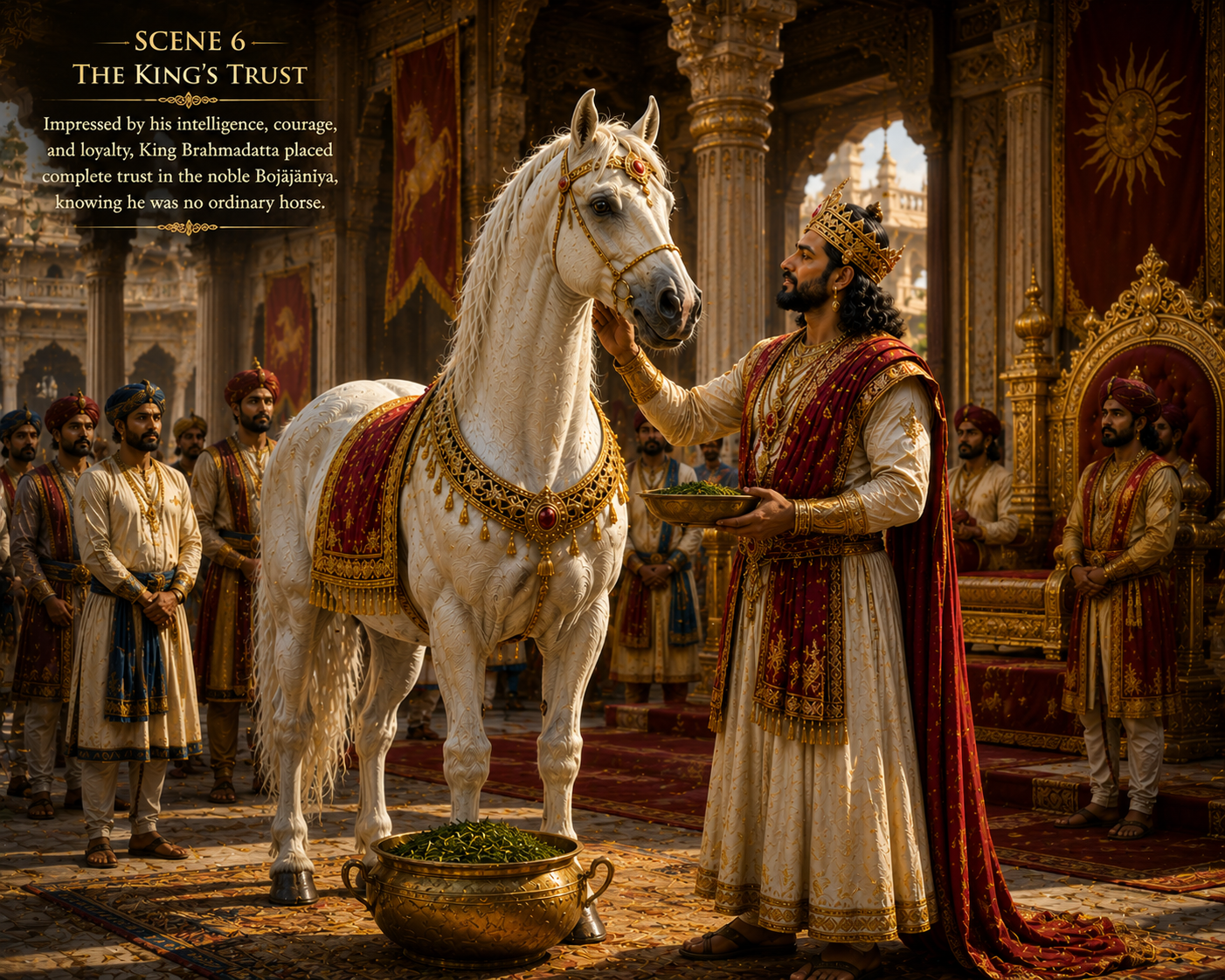
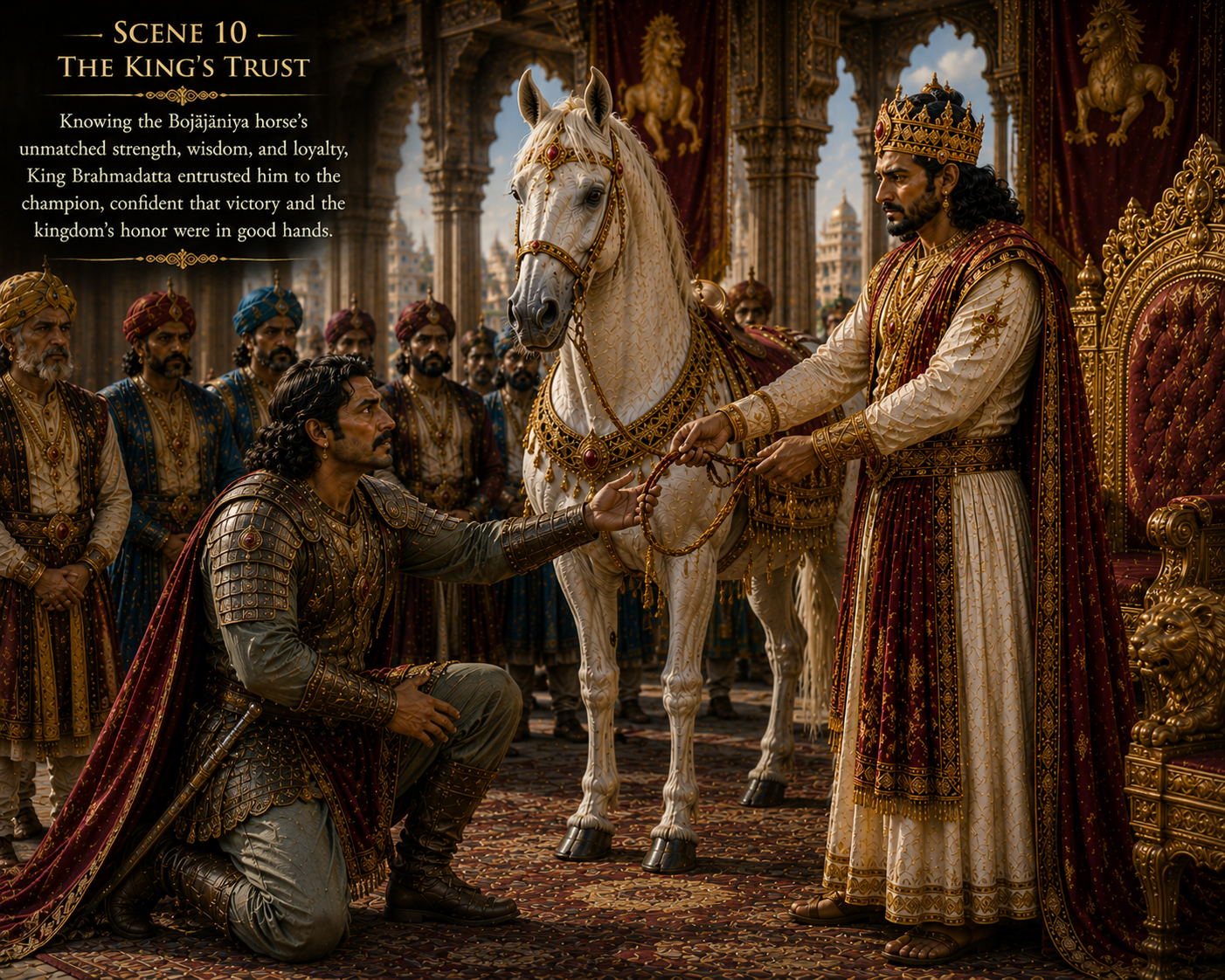
The King's Trust
Knowing the horse's unmatched abilities, the king entrusted him to the champion.
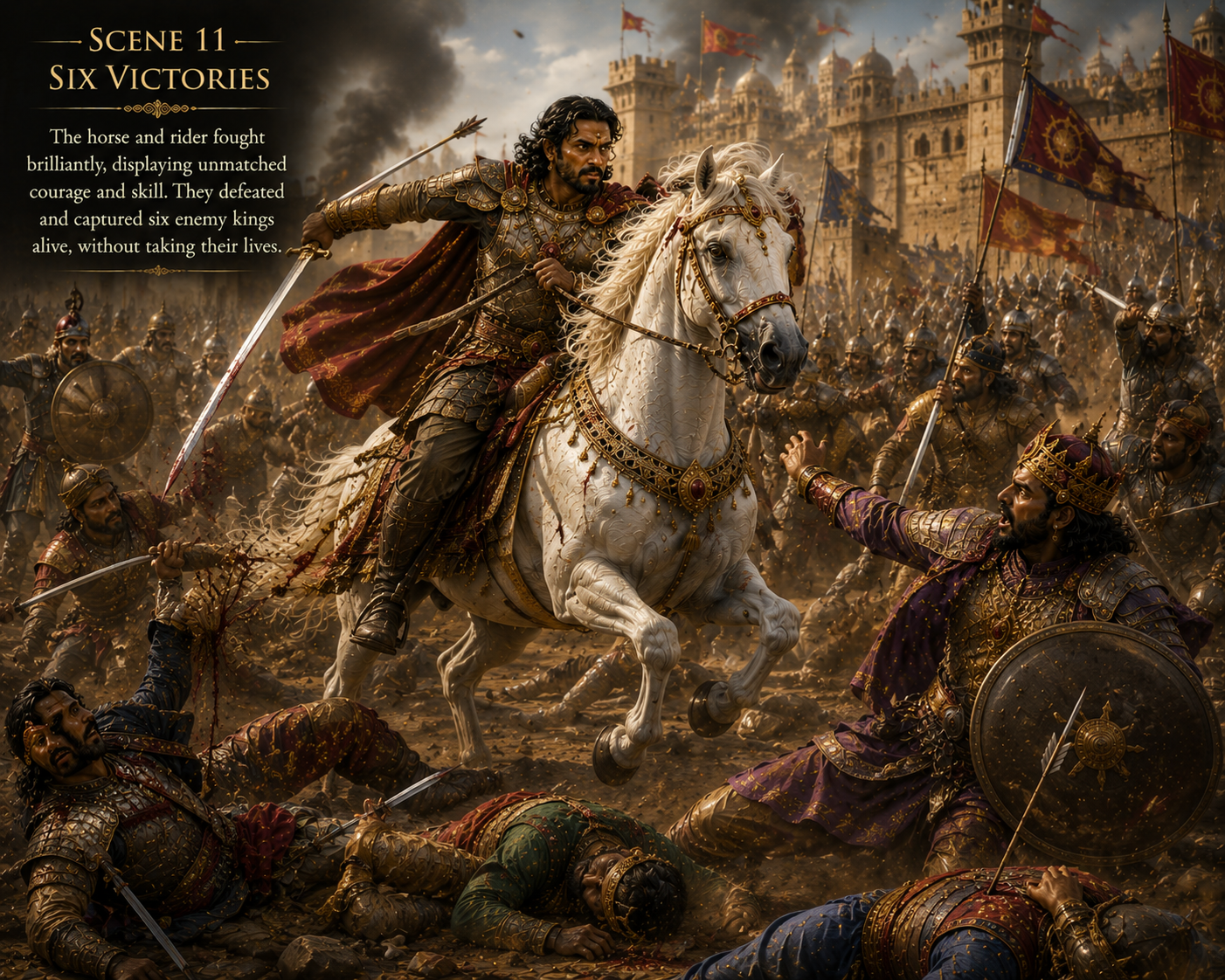
Six Victories
The horse and rider fought brilliantly, defeating and capturing six enemy kings alive.
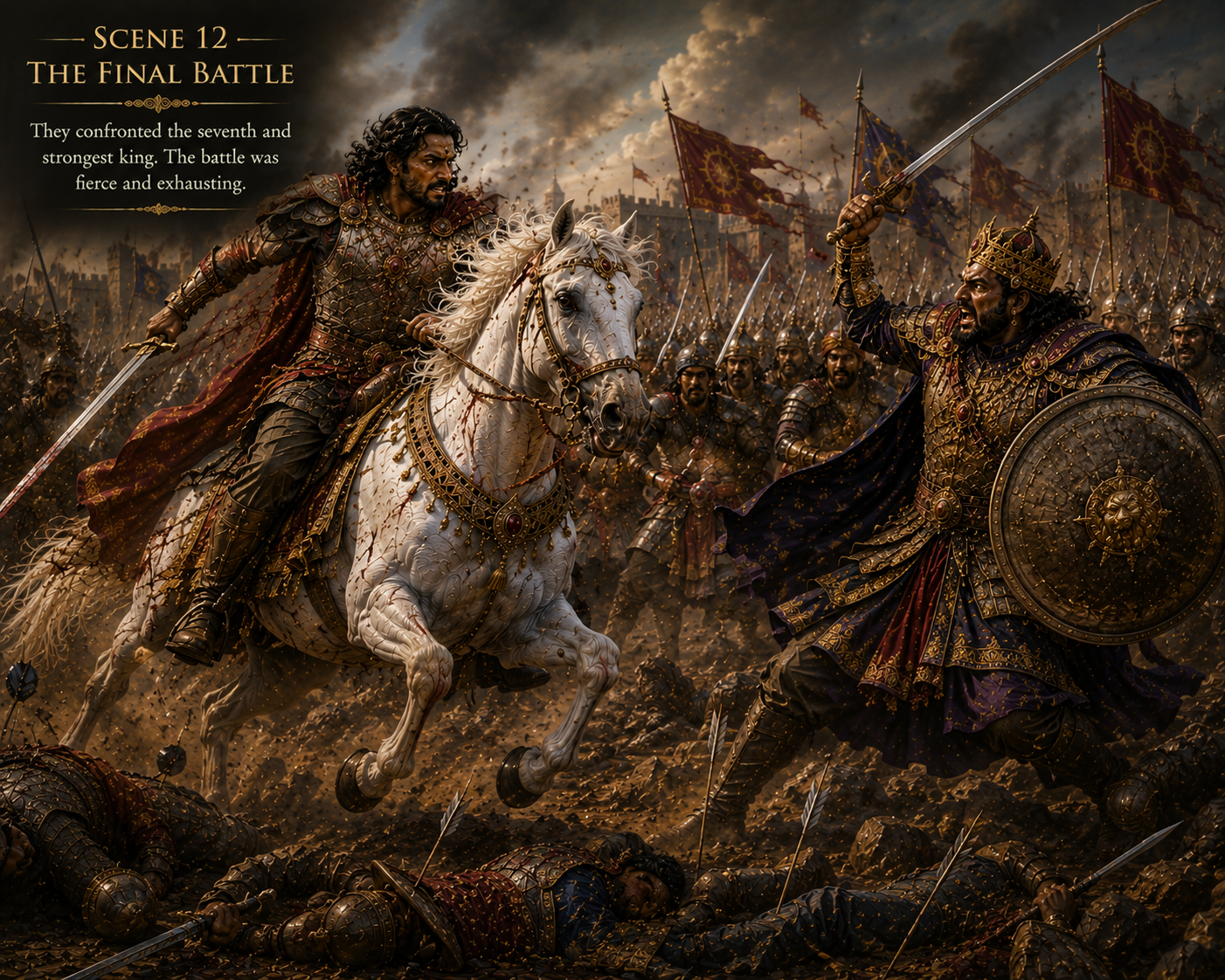
The Final Battle
They confronted the seventh and strongest king. The battle was fierce and exhausting.
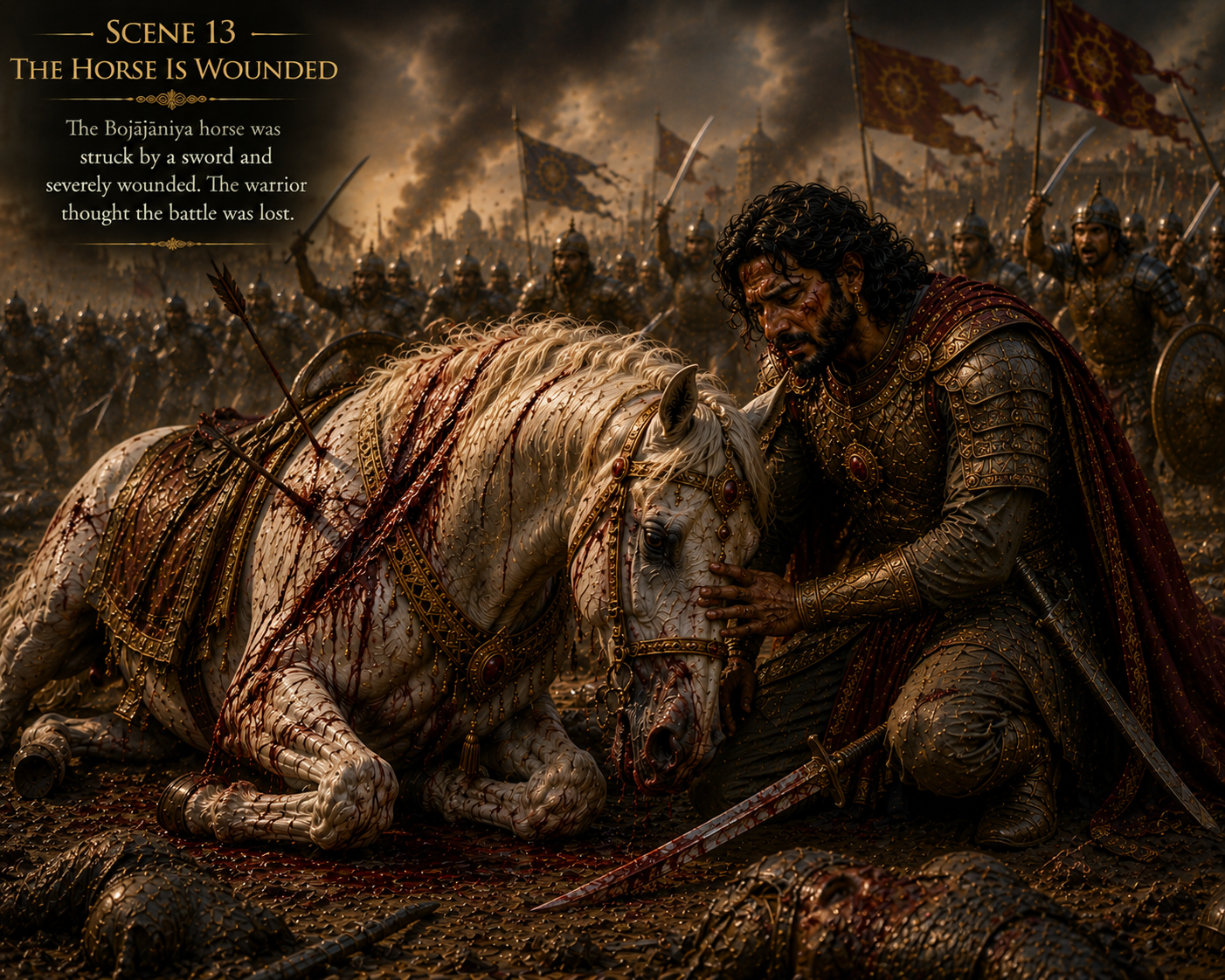
The Horse is Wounded
The Bojājānīya horse was struck by arrows and severely wounded. The warrior thought the battle was lost.
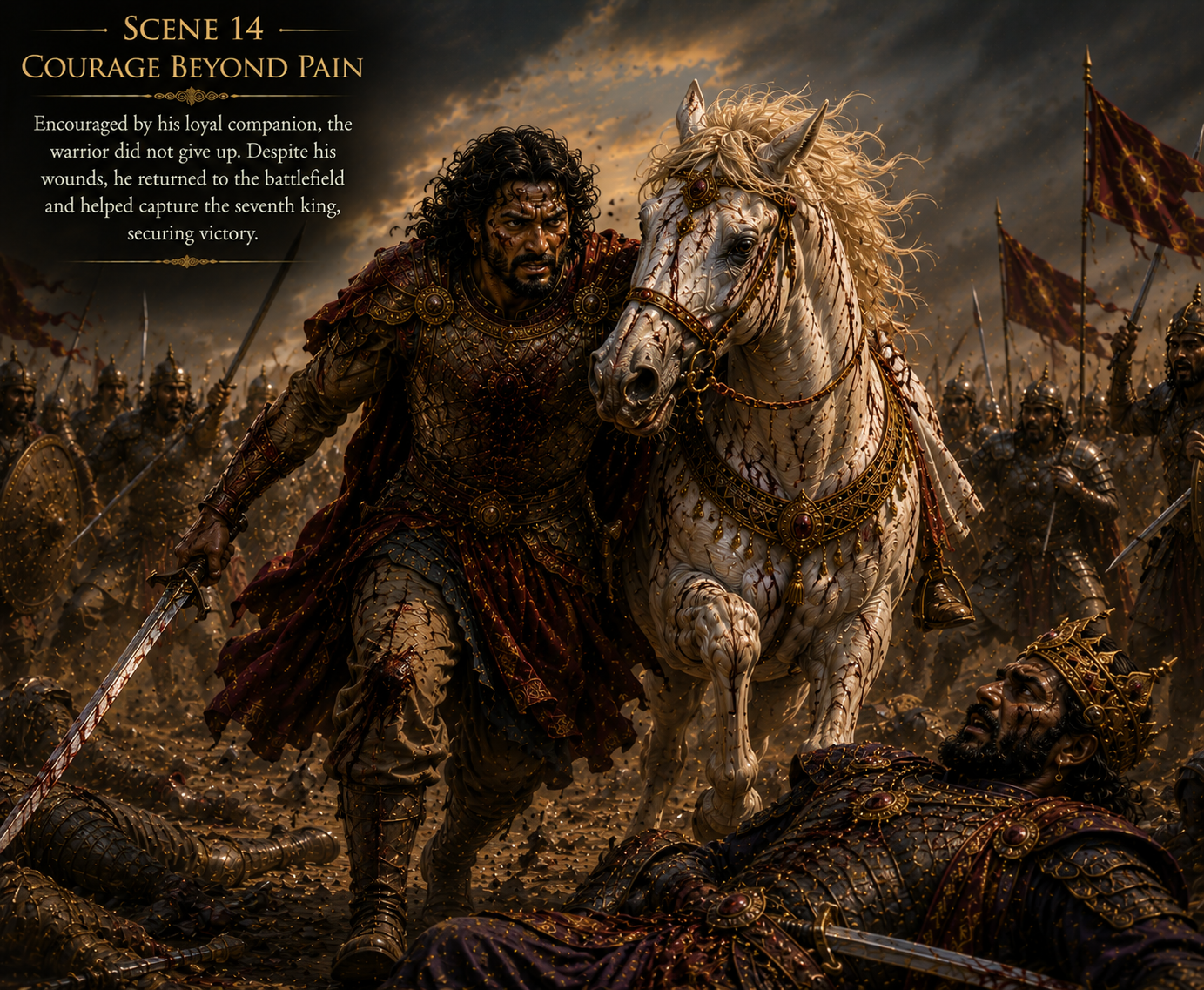
Courage Beyond Pain
The horse encouraged the warrior not to give up. Despite his injuries, he returned to the battlefield and helped capture the seventh king, securing victory.
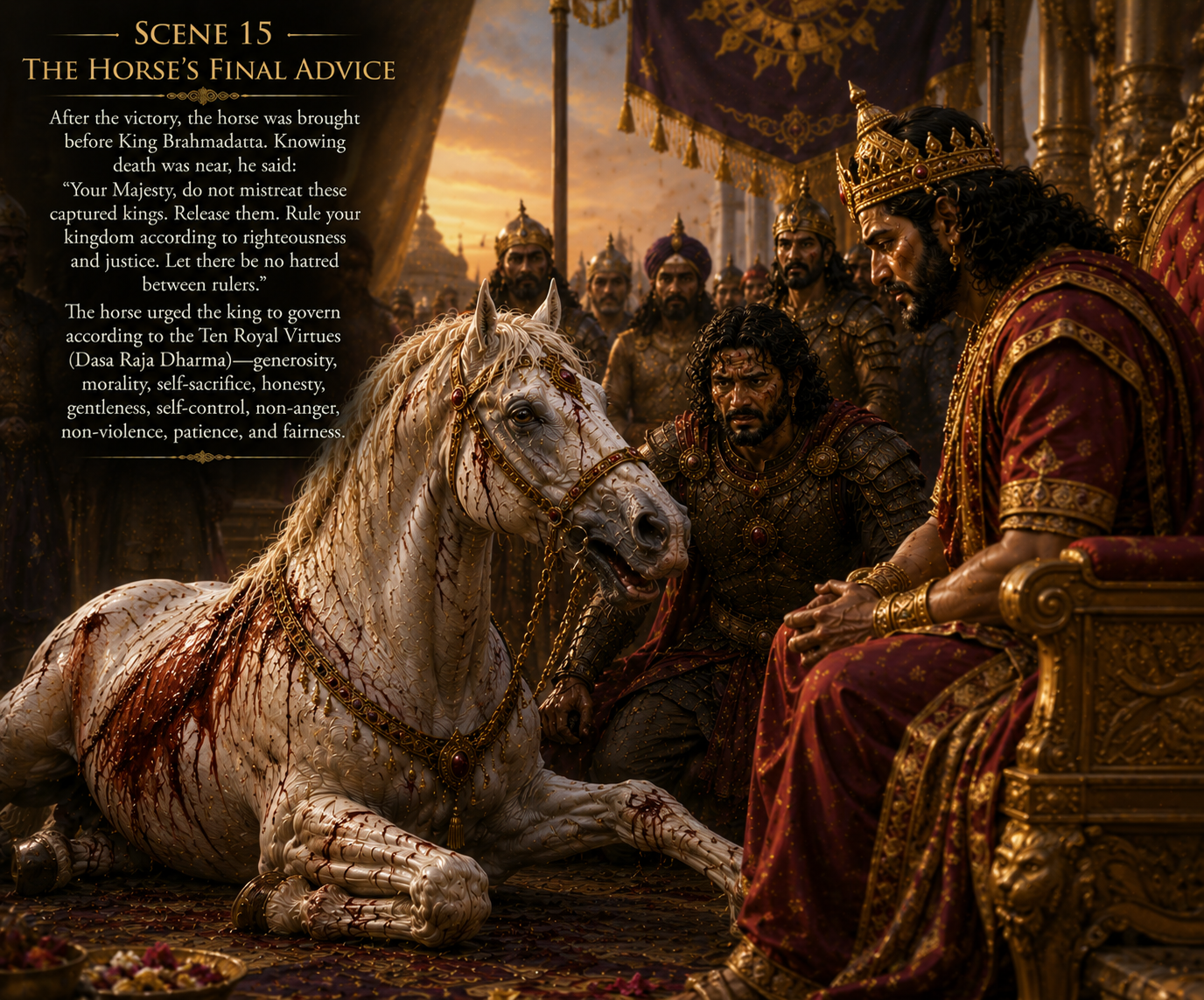
The Horse's Final Advice
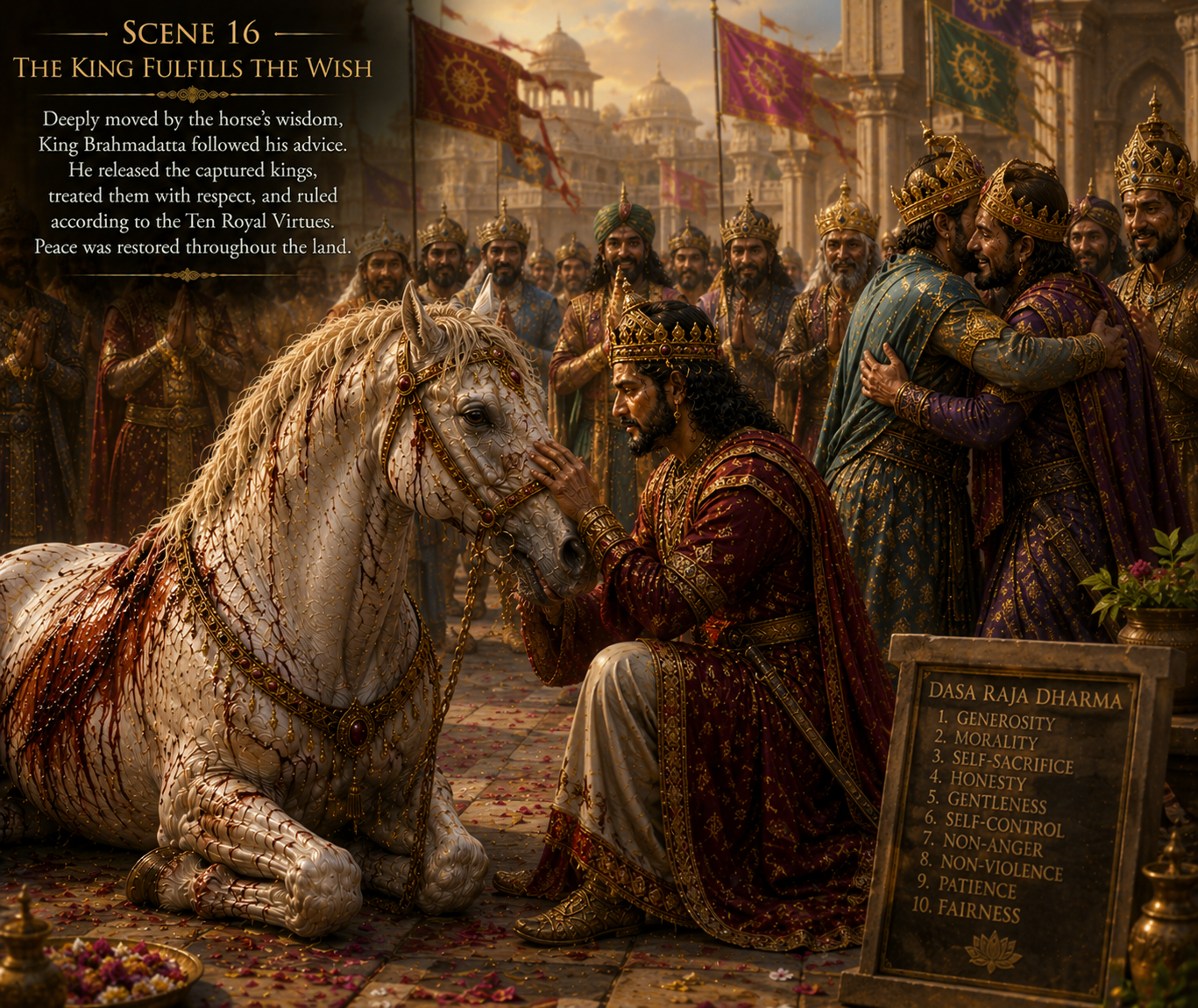
After the victory, the horse was brought before King Brahmadatta. Knowing death was near, he said: "Your Majesty, do not mistreat these captured kings. Release them. Rule your kingdom according to righteousness and justice. Let there be no hatred between rulers." The horse urged the king to govern according to the Ten Royal Virtues (Dasa Raja Dharma)—generosity, morality, self-sacrifice, honesty, gentleness, self-control, non-anger, non-violence, patience, and fairness.
The King Fulfills the Wish
Deeply moved, King Brahmadatta followed the horse's advice. He released the captured kings, treated them with respect, and ruled according to the Ten Royal Virtues. Peace was restored throughout the land.
The Buddha Reveals the Truth
The Buddha revealed that the warrior became Sāriputta, and the king became Ānanda, and the noble horse was himself in a former life. He explained to the monk: "Even when I was born as a horse, I never abandoned effort or duty. Now that you have obtained the rare opportunity to practice in the Buddha's teaching, you should strive diligently and not become discouraged."
Previous
Next


One day, seven kings with their armies surrounded Benares, threatening invasion. King Brahmadatta summoned his royal council. The ministers advised that before the king fought, a champion should be sent.

The ministers advised:

“Your Majesty, it would be better to send a champion first. If he succeeds, the kingdom will be saved. Only if he fails should you personally enter the war.”

Among the kingdom’s warriors was a renowned champion named Raotheyanan. The king summoned him and said:

“My son, seven kings have surrounded our kingdom. For the sake of the kingdom and its people, can you fight and defeat them?”

Raotheyanan respectfully replied:

“Your Majesty, I will do exactly as you command. But to accomplish this task, I need the Bojājānīya horse.”

King Brahmadatta loved the horse dearly. However, he understood the gravity of the situation. If the kingdom fell, neither the palace, the people, nor the horse would remain safe. Realizing that this was the moment for which the horse’s extraordinary qualities existed, he agreed.

“You are fighting for all of us. Take whatever you need.”

And so, he entrusted his beloved Bojājānīya horse to the champion.


As they prepared for battle, the noble horse spoke to his rider.

The Bojājānīya horse was not merely strong; he possessed wisdom and compassion.

He said:

“Why should we kill these kings? Let us capture them alive and bring them before our king.”

The warrior agreed.

The horse understood something important. Kings were not ordinary men. They were responsible for governing nations and guiding countless people. Even though these rulers had become enemies, killing them would only bring further suffering and instability. It was better to defeat them, humble them, and give them the opportunity to rule wisely in the future.

With this noble intention, they rode into battle.


They attacked the first enemy kingdom.

The Bojājānīya horse charged fearlessly through the battlefield. His speed was unmatched, his strength overwhelming, and his courage unshakable.

The enemy army was defeated.

The first king was captured alive and brought back to Baranesa.

Then they marched against the second king.

Again they were victorious.

The second king was captured alive.

The same happened with the third, fourth, fifth, and sixth kings.

One after another, the kingdoms fell before the extraordinary horse and his rider.

Soon, six kings sat as prisoners in Baranesa.


Only one enemy remained.

The seventh king.

Unlike the others, this king was powerful and determined. The final battle was far more difficult than all the previous battles combined.

The fighting was fierce.

Swords clashed.

Soldiers fell.

Dust and smoke filled the air.

During the struggle, the Bojājānīya horse was struck by a sword and received a severe wound.

Blood flowed from his body.

Seeing the horse badly injured, Raotheyanan became distressed.

He believed the battle was lost.

He withdrew from the battlefield and returned to camp.


There, the attendants began removing the horse’s armor.

The warrior prepared another horse so that he could continue the battle.

But the Bojājānīya horse understood what was about to happen.

He thought:

“This warrior does not fully understand my qualities. No other horse can accomplish what must be done today.”

He also understood something even deeper.

If the seventh king remained undefeated, all their previous victories would become meaningless.

The six captured kings would provide no security.

The kingdom would still fall.

The people would still suffer.

Everything accomplished so far would be lost.

The noble horse also felt profound gratitude toward King Brahmadatta.

All his life, the king had cared for him, protected him, fed him, and honored him.

The very blood flowing through his veins had been nourished by the king’s generosity.

Now, when the kingdom faced its greatest danger, how could he abandon his duty?

How could he repay kindness with retreat?


So the horse spoke to the warrior:

“Do not take another horse. There is no horse in this world that can win this battle for you. Put medicine on my wound. Place my armor back upon me. Let us return.”

The warrior was astonished.

But he obeyed.

Medicine was applied.

The armor was fastened once more.

Though wounded and weakened, the Bojājānīya horse rose again.


They returned to the battlefield.

The horse endured terrible pain.

Every movement caused suffering.

Yet he pressed forward.

Not for glory.

Not for fame.

Not for reward.

He fought because it was the right thing to do.

He fought out of gratitude.

He fought for the safety of the kingdom.

He fought because abandoning the task halfway would help no one.

With incredible determination, the Bojājānīya horse carried his rider through the final battle.

At last, the seventh king was defeated and captured alive.

Victory was complete.

The kingdom was saved.


The captured seventh king was brought before King Brahmadatta.

The war was over.

But the noble horse’s strength was fading.

His wound was grave.

He knew death was approaching.

The king heard of the horse’s condition and came to see him personally.

Deeply saddened, he stood beside the faithful animal who had saved his kingdom.


The Bojājānīya horse spoke his final words.

He did not ask for riches.

He did not ask for honor.

He did not ask for monuments or praise.

Instead, he said:

“Your Majesty, if you wish to do something for me, care for this warrior who has fought beside me.”

Then he spoke of the captured kings.

“Do not mistreat them. Release them.”

The horse understood that the true purpose of victory was not revenge.

Victory should create peace.

Then he advised the king:

“Rule according to righteousness. Let there be no hatred among rulers. Govern according to the Ten Royal Virtues.”

These virtues included generosity, morality, self-sacrifice, honesty, gentleness, self-control, non-anger, non-violence, patience, and fairness.

The horse’s vision extended beyond Baranesa.

He hoped for a world where kings governed wisely and peacefully, where rulers learned from their mistakes, and where kingdoms prospered through virtue rather than war.

Only then would his sacrifice truly have meaning.


King Brahmadatta listened with humility.

Though he was a king, he did not reject the advice.

He bowed his head and accepted it.

This humility was one of his own noble qualities.

He promised to follow the horse’s wishes.

Then, as the armor was removed from the horse’s body, the Bojājānīya horse peacefully passed away.


The king kept every promise.

He cared for the warrior.

He released the captured kings.

He ruled according to the Ten Royal Virtues.

Peace spread throughout the land.

The kingdom flourished.

And all involved lived out their lives well.


Having completed the story, the Buddha revealed the identities of those involved.

He said:

“At that time, King Brahmadatta was Ānanda.”

“The champion warrior was Sāriputta.”

“And the Bojājānīya horse was myself.”

Then the Buddha turned to the monk who had been neglecting his practice and explained the lesson.

“Even when I was born as an animal, I never abandoned effort. I fulfilled my duty despite pain, difficulty, and the certainty of death.”

“Now you have obtained something far more precious—the opportunity to practice within the Buddha’s teaching. Therefore, do not become discouraged. Do not be lazy. Strive diligently.”

And through this story, the Buddha taught that true greatness is not merely strength in battle, but courage that does not retreat, gratitude that does not forget kindness, wisdom that seeks peace rather than revenge, and effort that continues even in the face of suffering and death.

Leave a Reply

Your email address will not be published. Required fields are marked *